


Maria Dakowska (1950-2022)
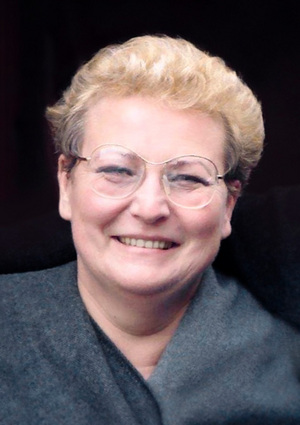
Professor Maria Dakowska was a distinguished scholar employed in the Institute of English Studies at the University of Warsaw in the years 2002–2021. Throughout this time she was affiliated with the Department of Applied Linguistics and Translation Studies. Before this period, she had worked in the Institute of Applied Linguistics at the same university for 20 years. She was a world-renowned author of many books and other publications in the area of psycholinguistics and foreign language didactics, a winner of various awards for academic achievements, and a supervisor of numerous theses and dissertations. In the years 2015–2020, she was also the Dean of the Faculty of Modern Languages at the University of Warsaw.
She gained her master’s degree in 1972 at the Maria Curie-Skłodowska University in Lublin and in 1982 received her doctoral degree from the same university on the basis of a dissertation Funkcje lingwistyki w modelach i procesach glottodydaktycznych (Functions of Linguistics in Glottodidactic Models and Processes). The supervisor of her Ph.D. work was famous linguist Professor Franciszek Grucza. The study was published in 1987 by the PWN publishing house. In 1996, she received her postdoctoral degree (habilitacja) on the basis of her monograph Models of Language Learning and Language Use in the Theory of Language Didactics, published by Peter Lang, for which she won an individual award of the Minister of National Education. Before gaining the title of full professor in 2009, she wrote three more books: in 2001 Psycholingwistyczne podstawy dydaktyki języków obcych (Psycholinguistic Foundations of Foreign Language Didactics), published by the PWN publishing house; in 2003 Current Controversies in Foreign Language Didactics, published by Warsaw University Press; and in 2005 Teaching English as a Foreign Language. A Guide for Professionals, published by PWN. After receiving her professorship, she wrote two more monographs: in 2014 O rozwoju dydaktyki języków obcych jako dyscypliny naukowej (On the Development of Foreign Language Didactics as an Academic Discipline), published by Warsaw University Press, and in 2015 In Search of Processes of Language Use in Foreign Language Didactics, published by Peter Lang. Apart from the seven books, she published around fifty articles, book chapters, and other works. She was also a co-editor of five books in the field.
Her works focus on three main themes: (1) the question of the status of foreign language didactics as an independent academic discipline and its relation to other disciplines, (2) language acquisition models and the psycholinguistic basis of foreign language didactics, and (3) foreign language teaching methods. All her publications, the books in particular, have become must-read classics for linguists, specialists in English studies, and language teachers. They are on the bookshelves of all Polish research libraries. Based on her works, other Polish professors, experts in the field, have expressed the view that Professor Dakowska was the foremost theoretician of her generation. Her books from 2001 and 2003 were especially highly evaluated. The conclusions drawn from the theoretical analyses conducted by Professor Dakowska in these books were considered comparable to those fomulated by famous linguists, such as Michael Long, Henry Widdowson, or Rod Ellis. The book first published in 2005, Teaching English as a Foreign Language. A Guide for Professionals, is a handbook often used by educators during teacher training courses. It is based on the latest developments in linguistics, cognitive psychology, didactics, and the theory of communication. It gives students an opportunity to develop their professional expertise.
Professor Dakowska’s large contribution to the field of applied linguistics is well known not only in the Polish academic community, but also abroad, as she was the recipient of many scholarships and in this way gained a great deal of international experience. She visited various universities for research and teaching purposes, for example Kent State University, the University of Hawaii, and Michigan State University in the USA; the University of Edinburgh in the UK, and Saarland University in Germany a few times. During her stays abroad, she worked with many renowned scholars employed in the host institutions, for example with Professors Susan Gass, Graham Crookes, or Gabriele Kasper. She also cooperated with many other German universities, for example in Heidelberg, Wuppertal, Berlin, and Bonn, and she organised international student exchanges.
Professor Dakowska’s expertise in the field, as well as organisational and leadership skills would lead to her being appointed to various administrative, honorific, and other positions. For example, she was the Chairwoman of the Institute’s Academic Council and of many committees at the Faculty of Modern Languages. She also worked as an expert of the Ministry of National Education giving opinions and approvals on the use of textbooks for learning English at all stages of education. She served on the editorial boards of many international academic journals, and was frequently a reviewer for Ph.D.s, post-doctoral degrees, as well as for professorial advancements. However, the most prominent and demanding position that Professor Dakowska held was that of the Dean of the Faculty of Modern Languages. Her most important goals, which she had set before becoming the Dean, was to serve and support the academic community, to ensure the highest possible results of the evaluation process which was approaching, to maintain the financial status of the Faculty, and to reactivate efforts to complete the construction of the new building at Dobra 55, where now the entire Faculty is located. Her time as Dean was particularly difficult due to the fact that from 2018, revolutionary higher education reforms started to be introduced, and two years later the coronavirus pandemic made its terrible impact. Both of these situations required a huge amount of organisational work. However, Professor Dakowska continued to strive towards the achievement of her goals with remarkable success, devoting her free time to work, which she prioritised over private matters, even during weekends and holidays. Most importantly, she never ascribed the success to her own efforts alone, but always emphasised that it was the result of team work. She was very appreciative of everyone’s contribution and always looked to harness this team spirit.
For all her hard work, Professor Dakowska received the Rector’s Individual Award five times during her career, the Medal of the National Education Commission in 2012, and the Gold Medal for Long Service in academia in 2017.
Finally, Professor Dakowska’s work with students needs to be outlined. Being a prolific writer, an authority in the field of psycholinguistics and foreign language didactics, recognised in Poland and abroad, and a charismatic speaker, Professor Dakowska successfully shared her knowledge and inspired students to extend theirs. In the Institute of English Studies, she gave lectures and taught courses addressed to prospective teachers of English as a foreign language. She also conducted M.A. and Ph.D. seminars. Seven students defended their Ph.D. dissertations written under her supervision. In the Institute of English Studies she also supervised over 100 M.A. and 30 B.A. theses. During her lectures on psycholinguistic foundations of foreign language didactics, she presented topics in first language acquisition, bilingualism, second language acquisition research, and developing the four language skills in English. She familiarised students with key issues in language learning and teaching in order to make them understand the real cognitive processes of classroom language learning. During the courses, she concentrated on problems connected with the psychology of communication, its structure and nature. The courses covered numerous topics, such as learner autonomy, motivational strategies, strategies of language learning and teaching, authentic materials, content-based language teaching, vocabulary in TEFL (Teaching English as a Foreign Language), and form-focused instruction, to name just a few. As she often emphasised, her guiding principle was to seek justification for teaching choices, and to deal with teaching strategies rationally rather than intuitively.
Students perceived her as a very knowledgeable and experienced scholar, and a cheerful person. What they liked in particular was that even when discussing complex phenomena and theories, Professor Dakowska used to digress by telling anecdotes from everyday life and stories about her beloved granddaughter. She illustrated explanations with many examples, presenting issues in a broader context. At the same time, she taught students critical thinking, emphasising that a language teacher’s work has to be flexible as in reality it can divert from what is shown in research, that each situation requires individual evaluation and adjusting of teacher activities to the context.
Professor Maria Dakowska was bid farewell by her family, the University of Warsaw authorities, and other representatives of the academic community who attended in large numbers the academic Church of St. Ann in Krakowskie Przedmieście Street on 22 February, 2022. During the ceremony, the funeral oration was delivered by the Rector of the University of Warsaw, Professor Alojzy Nowak, the Dean of the Faculty of Applied Linguistics, Professor Magdalena Olpińska-Szkiełko, and Professor Dakowska’s two sons: Tomasz and Marek.
Katarzyna Hryniuk